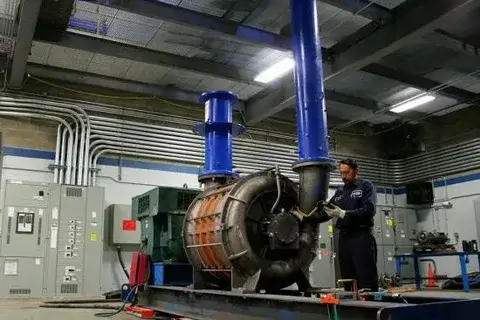
What Are Industrial Blowers and How Do They Work?
Industrial blowers are mechanical devices used to move air or gas at a specific flow rate and pressure for industrial processes. They play a critical role in ventilation, cooling, dust collection, combustion air supply, and pollution control systems across various industries. Unlike simple fans, industrial blowers are designed to handle high-pressure airflow and continuous heavy-duty operation.
In today’s industrial environment, maintaining proper airflow is essential for safety, efficiency, and equipment performance. Industrial blowers help control temperature, remove contaminants, and ensure smooth operation of machinery in manufacturing plants and processing units.
Industrial blowers are the backbone of efficient airflow management, ensuring safety, productivity, and reliability across industrial operations.
Why Industrial Blowers Are Essential in Modern Industries
Industrial blowers are widely used because they provide controlled airflow in demanding conditions. They improve air quality, enhance workplace safety, and support critical industrial processes by maintaining consistent air movement.
Their robust design allows them to operate continuously under high load conditions, making them a reliable solution for industries where downtime is costly and performance consistency is essential.
Applications of Industrial Blowers
Industrial blowers are used across multiple sectors, including:
- Manufacturing & Processing Plants
- HVAC & Ventilation Systems
- Dust Collection & Fume Extraction
- Chemical & Pharmaceutical Industries
- Power Plants & Pollution Control Systems
Conclusion
Industrial blowers are vital components in maintaining safe, efficient, and controlled industrial environments. By understanding how they work and where they are used, industries can select the right blower solution to improve performance, reduce energy consumption, and ensure long-term operational reliability.